
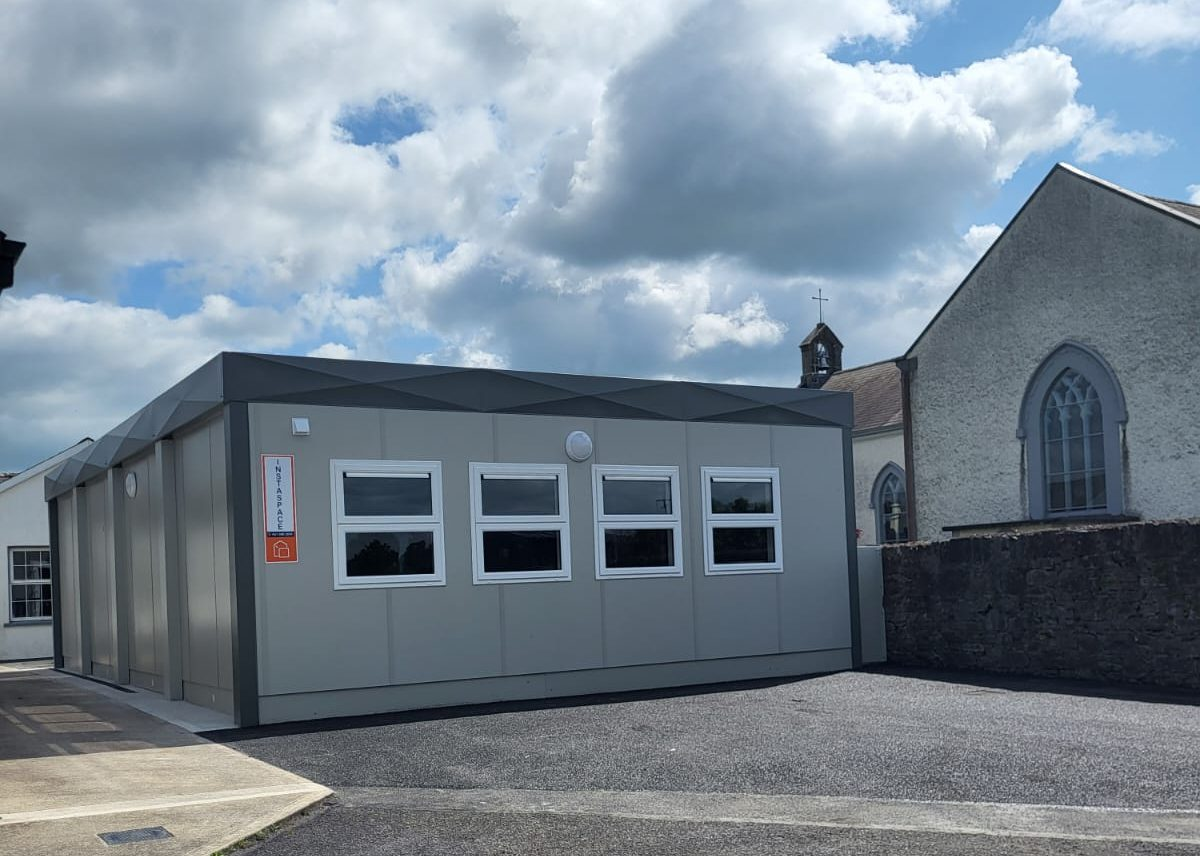
Modular facilities are transforming how pharmaceutical and life sciences companies approach facility development in Ireland. As the sector continues to expand, organisations face increasing pressure to deliver compliant spaces quickly whilst maintaining high standards of quality and operational control. Modular construction offers a structured and reliable solution to these challenges.
In Ireland, pharmaceutical operations must meet strict regulatory, environmental, and safety expectations. Traditional construction methods often struggle to keep pace with evolving production demands and technological change. In contrast, modular facilities are designed with flexibility and precision at their core, making them well-suited to fast-moving environments for the pharmaceutical sector in Ireland
Another key driver is predictability. Modular facilities are planned, manufactured, and assembled using repeatable processes. This consistency supports smoother project delivery and clearer operational planning. For pharmaceutical operators, this means facilities that align with process requirements from day one.
As a long-term infrastructure strategy, modular development supports innovation, scalability, and resilience across the pharmaceutical sector in Ireland.
The Growing Demand for Modular Solutions in Pharma
The pharmaceutical sector is experiencing sustained growth, driven by innovation, global supply needs, and evolving healthcare demands. Facilities must now support advanced processes whilst remaining adaptable to future change. Modular construction is increasingly seen as a practical response to this demand.
Within the Pharmaceutical sector in Ireland, modular facilities allow organisations to respond quickly to capacity requirements without compromising compliance. Modular systems can be configured to support manufacturing, research, quality control, and support functions.
In addition, modular solutions align well with phased development strategies. Companies can expand operations in stages, reducing disruption whilst maintaining operational continuity. This is particularly valuable in regulated environments where downtime must be minimised.
By supporting speed, consistency, and adaptability, modular solutions are becoming a core part of pharmaceutical infrastructure planning.
Regulatory Readiness and Compliance by Design
Compliance is a fundamental requirement in pharmaceutical environments. Facilities must support controlled processes, clean operations, and detailed documentation. Modular construction addresses these needs through compliance-focused design and manufacturing.
Modular facilities for the Pharmaceutical sector are developed with regulatory alignment built into layouts and material selection. Controlled environments, cleanroom-ready spaces, and defined process flows are considered from the earliest design stages.
Manufacturing modules in controlled settings allows for better quality assurance and traceability. This supports validation and qualification processes during commissioning.
By embedding compliance into the structure itself, modular facilities reduce risk and support smoother regulatory engagement throughout the facility lifecycle.
Rapid Modular Pharma Projects and Speed of Delivery
Speed is often critical in pharmaceutical development. Whether responding to market demand or advancing new therapies, time-to-operation can be a decisive factor. Rapid modular pharma projects are designed to compress timelines without sacrificing quality.
Off-site manufacturing allows site preparation and module fabrication to occur simultaneously. This parallel approach significantly reduces overall project duration. Once delivered, modules are assembled efficiently, enabling faster operational readiness.
Key advantages of rapid modular delivery include:
- Reduced construction timelines through parallel workflows
- Greater schedule certainty and planning confidence
- Faster transition from build to production
For pharmaceutical operators, this speed supports agility and competitive advantage.
Scalable Modular Labs for Evolving Operations
Laboratory environments must evolve alongside scientific and technological advancements. Scalable modular labs provide a flexible framework for supporting this evolution. Modular lab spaces can be expanded, reconfigured, or repurposed as operational needs change.
Pharma modular facilities often include laboratory modules designed around standardised dimensions and services. This allows new lab capacity to be added without redesigning the entire facility.
Scalability also supports risk management. Organisations can introduce capacity incrementally, aligning investment with demand. This controlled growth model supports long-term operational stability.
Through scalable modular labs, pharmaceutical companies can future-proof their research and development environments.
Biotech Modular Facilities and Controlled Environments
Biotech operations require highly controlled environments to support sensitive processes. Biotech modular facilities are well suited to these requirements due to their precision and consistency.
Modules are offsite-manufactured under strict conditions, allowing for accurate integration of building services and environmental controls. This supports stable internal conditions critical for biotech processes.
Layouts are designed to support clean workflows, segregation of functions, and efficient movement of materials and personnel. These design features are embedded into the module before delivery.
By using modular construction, biotech facilities achieve high levels of control whilst maintaining flexibility for future adaptation.
Turnkey Pharma Buildings and Operational Integration
Turnkey pharma buildings are delivered as complete, operational-ready environments. Modular construction supports this approach by integrating structure, services, and finishes during manufacture.
For pharmaceutical operators, operational integration is essential. Process equipment, utilities, and support spaces must align seamlessly. Modular planning allows these elements to be coordinated early, reducing commissioning challenges.
Turnkey modular facilities typically support:
- Streamlined validation and qualification processes
- Immediate usability upon completion
- Reduced coordination complexity during delivery
This integrated approach supports faster and more reliable operational start-up.
Modular Lab Fit-Out and Process Alignment
Modular lab fit-out focuses on aligning physical spaces with specific process requirements. Modular systems allow lab interiors to be customised whilst retaining a standardised structural framework.
Services such as ventilation, power, and data are pre-integrated into modules, supporting efficient fit-out. This reduces on-site work and improves quality control.
As processes change, modular lab fit-out allows targeted updates rather than full refurbishment. This adaptability supports continuous improvement and innovation within pharmaceutical operations.
By aligning fit-out with modular structure, facilities remain responsive to evolving scientific needs.
Quality Control and Manufacturing Consistency
Consistency is critical in pharmaceutical environments. Modular construction supports consistent quality through repeatable manufacturing processes. Each module is produced to defined specifications, reducing variability.
This consistency extends to finishes, tolerances, and service integration. For regulated environments, this predictability supports validation and operational confidence.
Quality control processes are applied throughout manufacturing, ensuring that modules meet required standards before delivery. This reduces the likelihood of rework and delays on site.
Through consistent manufacturing, pharma modular facilities support reliable and compliant operations.
Workforce Efficiency and Facility Layout
Facility layout has a direct impact on workforce efficiency. Modular design allows layouts to be optimised for movement, supervision, and collaboration. Clear zoning supports efficient workflows and reduces unnecessary travel.
Support spaces such as changing areas, offices, and technical rooms are integrated into the modular plan. This ensures that staff needs are addressed alongside operational requirements.
Efficient layouts also support safety and compliance. Clear separation of clean and non-clean areas reduces contamination risk.
By designing for people as well as processes, modular facilities enhance overall operational performance.
Sustainability and Long-Term Performance
Sustainability is increasingly important in pharmaceutical construction. Modular methods support efficient material use and reduced waste through controlled manufacturing. This contributes to responsible resource management.
Energy performance is enhanced through precise construction and consistent insulation standards. Stable internal environments support both process control and occupant comfort.
Long-term performance is supported through durable materials and accessible building systems. Modular components can be maintained or upgraded with minimal disruption.
These sustainability benefits support the long-term viability of pharma modular facilities in Ireland.
The Future of Pharma Modular Facilities in Ireland
The pharmaceutical sector continues to evolve rapidly, and infrastructure must keep pace. In Ireland, modular Pharma facilities provide a flexible platform for future growth and innovation.
Advancements in modular design and manufacturing will further enhance precision and adaptability. Facilities can increasingly support advanced therapies and complex processes.
As regulatory expectations and operational demands grow, modular solutions will play an essential role in delivering resilient pharmaceutical infrastructure across Ireland.
Conclusion and Next Steps
Modular facilities offer a strategic solution for delivering compliant, scalable, and future-ready pharmaceutical environments in Ireland. Through speed, precision, and adaptability, modular construction supports the complex needs of modern pharma and biotech operations.
Instaspace Modular brings expertise in modular delivery tailored to the pharmaceutical sector, supporting organisations from concept through to completion. By choosing modular solutions, businesses can respond confidently to change whilst maintaining high operational standards.
Take the next step with Instaspace and explore how modular pharma facilities can support your operational goals.
Frequently Asked Questions
Q1. What are pharma modular facilities used for in Ireland?
Pharma modular facilities are used for manufacturing, laboratory work, quality control, and support functions. They provide compliant environments designed around regulated pharmaceutical processes. Their flexibility supports both short-term and long-term operational needs.
Q2. How do rapid modular pharma projects support faster delivery?
Rapid modular pharma projects use parallel manufacturing and site preparation to reduce timelines. Modules are assembled efficiently on site, enabling quicker operational readiness. This approach supports faster response to production or research demands.
Q3. Are modular labs suitable for highly regulated environments?
Yes, scalable modular labs are designed with regulatory compliance in mind. Controlled manufacturing ensures consistent quality and accurate integration of services. This supports validation and ongoing compliance requirements.
Q4. Can modular pharma buildings be expanded over time?
Turnkey pharma buildings delivered through modular construction are highly scalable. Additional modules can be added as capacity needs change. This allows facilities to grow without major disruption to existing operations.
Q5. How does modular lab fit-out support changing processes?
Modular lab fit-out allows interiors and services to be adapted without structural changes. This supports evolving workflows and new technologies. As a result, facilities remain flexible and future-ready.