
Modular GP surgeries Ireland are becoming an increasingly popular option for healthcare providers seeking flexible and practical solutions for expanding patient services. As healthcare demands continue to evolve, medical professionals are often faced with an important decision: should they invest in a modular facility or pursue a traditional clinic development?
Both approaches can provide high-quality healthcare environments, but they differ in several areas, including project delivery, flexibility, future expansion opportunities, and operational considerations. Understanding these differences can help healthcare organisations make informed decisions that support both current needs and future growth.
This guide explores the key factors medical professionals should consider when comparing modular healthcare facilities with traditionally constructed clinics.
Understanding the Difference Between Modular and Traditional Clinics
Before comparing the two options, it is important to understand how each approach works.
Traditional clinics are built entirely on-site using conventional construction methods. The process generally involves multiple phases, including site preparation, structural work, internal fit-outs, and final commissioning.
By contrast, healthcare facilities developed through Modular construction are manufactured in controlled environments before being transported and installed on-site. While both options ultimately provide healthcare spaces designed for patient care, the construction approach differs significantly.
The choice between the two often depends on organisational priorities, site requirements, and long-term operational goals.
Why Healthcare Providers Are Exploring Alternative Building Solutions
Healthcare providers face increasing pressure to accommodate growing patient demand while maintaining efficient operations. Existing facilities may become overcrowded, and expanding services within traditional premises is not always straightforward.
As a result, many organisations are exploring flexible building solutions that can adapt to changing healthcare needs.
Modern healthcare environments require more than consultation rooms. Facilities may also need treatment spaces, staff areas, waiting rooms, administration offices, and support services. A building solution that can accommodate these requirements while supporting future growth becomes an important consideration.
Comparing Project Flexibility
Flexibility is often one of the most significant differences between the two approaches.
Traditional buildings are generally designed as permanent structures with fixed layouts. While modifications can be made later, alterations may involve disruption to daily operations and additional project planning.
Adapting to Changing Healthcare Needs
Healthcare requirements rarely remain static. Population growth, service expansion, and changing patient expectations can all influence facility requirements over time.
Many providers investigating Modular GP surgeries Ireland appreciate the ability to create facilities that can adapt alongside organisational growth. Additional space can often be planned more efficiently when future expansion is considered from the beginning.
This flexibility can be particularly valuable for practices experiencing increasing patient numbers or introducing new healthcare services.
Supporting Temporary and Long-Term Requirements
Some healthcare organisations require additional space while refurbishment projects are taking place. Others need permanent accommodation for expanding services.
Permanent modular buildings can support both scenarios, allowing healthcare providers to develop facilities that align with their specific operational objectives.
Design and Patient Experience
A common misconception is that modular healthcare facilities offer limited design possibilities. Modern healthcare environments, however, are designed with patient comfort, staff efficiency, and practical functionality in mind.
Both traditional and modular clinics can provide professional healthcare settings that support patient care.
Creating Functional Clinical Environments
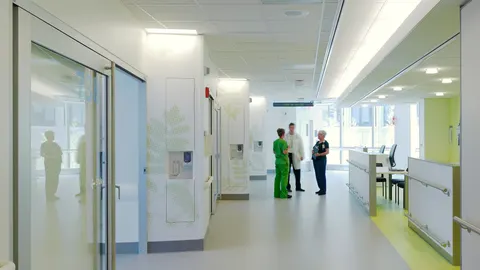
Effective healthcare facilities require careful planning. Consultation rooms, treatment areas, reception spaces, and staff facilities must work together to create a positive experience for patients and healthcare professionals.
Regardless of construction method, successful projects focus on workflow, accessibility, privacy, and comfort.
Healthcare providers should evaluate how each building option supports their day-to-day operations rather than focusing solely on construction methods.
Accessibility and Compliance
Accessibility remains a critical consideration for all healthcare environments. Facilities should support patients with varying mobility requirements and provide easy navigation throughout the building.
Whether selecting traditional construction or modular healthcare buildings Ireland, compliance with relevant building standards and accessibility requirements should remain a priority throughout the planning process.
Site Considerations and Installation Requirements
Every healthcare project is influenced by site conditions.
Factors such as available space, site access, existing infrastructure, and surrounding developments can affect the suitability of different building approaches.
Traditional developments often involve extensive on-site activity throughout the construction period. Depending on the location, this may create operational challenges for healthcare providers who need to maintain services during development.
By comparison, modular construction transfers much of the manufacturing activity away from the healthcare site itself.
Working Within Existing Healthcare Campuses
Many healthcare organisations operate from active sites where maintaining uninterrupted services is essential.
When considering expansion, decision-makers often evaluate how construction activities may affect patients, staff, parking arrangements, and daily operations.
Planning requirements, site access, and installation logistics should all form part of the early decision-making process.
Long-Term Scalability and Future Growth
Healthcare organisations often plan for future service expansion. Therefore, scalability becomes an important factor when comparing development options.
Traditional buildings can support future growth, but expansion projects may require significant redevelopment work depending on the original design.
Planning for Future Demand
Patient populations can change considerably over time. Healthcare providers may introduce new services, recruit additional practitioners, or expand treatment capabilities.
Facilities that allow for future adaptation can help organisations respond more effectively to these changing demands.
This is one reason why modular GP surgeries Ireland continue to attract attention among healthcare professionals seeking long-term flexibility.
Supporting Broader Organisational Growth
Many organisations operate facilities across multiple sectors. For example, businesses familiar with flexible building approaches through projects such as Modular warehouse buildings often recognise the advantages of adaptable space solutions in healthcare environments as well.
While operational requirements differ significantly, the importance of flexibility remains consistent across sectors.
Cost Considerations Beyond Initial Construction
When comparing options, organisations often focus on initial project costs. However, long-term value should also be considered.
Decision-makers should evaluate factors such as:
- Operational efficiency
- Maintenance requirements
- Future adaptability
- Facility utilisation
- Expansion potential
The most suitable solution is not always determined solely by upfront expenditure. Instead, healthcare providers should consider how effectively the facility will support clinical services over the coming years.
Planning and Regulatory Considerations
Healthcare developments must comply with applicable planning and building requirements.
The specific approvals required will depend on factors such as location, site conditions, intended use, and project scope.
Understanding Approval Requirements
Planning requirements vary between projects. Healthcare providers should engage with relevant professionals early to understand the approvals that may be required before development begins.
Early planning can help identify potential challenges and support smoother project delivery.
Building Standards and Compliance
Both traditional and modular healthcare facilities must meet relevant standards relating to safety, accessibility, and functionality.
Compliance should be considered throughout design, planning, and implementation to ensure that facilities are suitable for healthcare operations.
Which Option Is Right for Your Practice?
The answer depends on your organisation’s objectives.
Healthcare providers seeking a highly customised facility with extensive site-specific design requirements may find traditional construction suitable for their needs.
However, organisations prioritising flexibility, future expansion opportunities, and efficient project delivery often explore modular healthcare solutions as part of their decision-making process.
The best approach is to assess operational requirements, patient needs, site conditions, and long-term growth plans before selecting a development strategy.
Final Thoughts
Choosing between modular GP surgeries Ireland and traditional clinics requires careful consideration of operational goals, patient requirements, and future growth plans. Both approaches can deliver professional healthcare environments, but they offer different advantages depending on the specific needs of the organisation.
As healthcare providers continue to adapt to changing service demands, flexible facility solutions are becoming an increasingly important part of long-term planning. By evaluating factors such as scalability, accessibility, compliance, and functionality, medical professionals can make informed decisions that support both patient care and organisational development.
For guidance on healthcare space solutions and future facility planning, you can contact us to discuss your project requirements.
Frequently Asked Questions
1. Are modular GP surgeries suitable for permanent healthcare use?
Yes. Permanent modular buildings can be designed to support long-term healthcare operations while meeting the functional requirements of modern medical facilities.
2. How do modular healthcare facilities differ from traditional clinics?
The primary difference lies in the construction process. Modular facilities are manufactured off-site before installation, whereas traditional clinics are built entirely on-site.
3. Can modular healthcare buildings be expanded in the future?
Future expansion possibilities depend on the design and site conditions. Many healthcare providers consider modular solutions because they can support evolving operational requirements.
4. Do modular GP surgeries need planning permission?
Planning requirements vary depending on the project, location, and intended use. Healthcare providers should seek professional guidance to determine the approvals required for their specific development.
5. What factors should healthcare providers consider before choosing a building solution?
Key considerations include patient demand, site conditions, accessibility requirements, future growth plans, operational needs, and long-term organisational objectives.